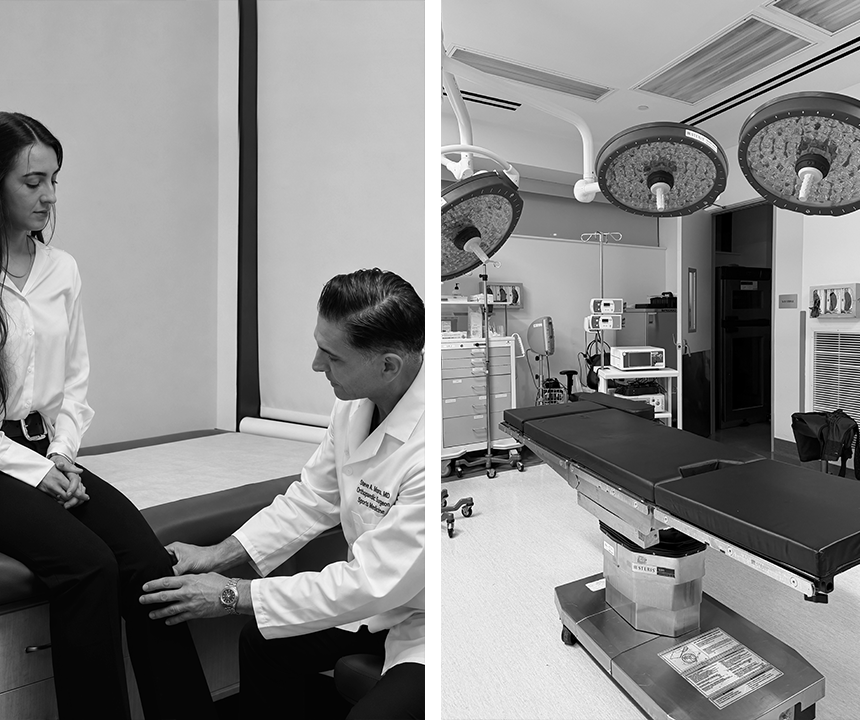

Meet Dr. Mora
REPAIR BEFORE REPLACE
Before I became the surgeon, I was the patient who needed one. And that changed everything.
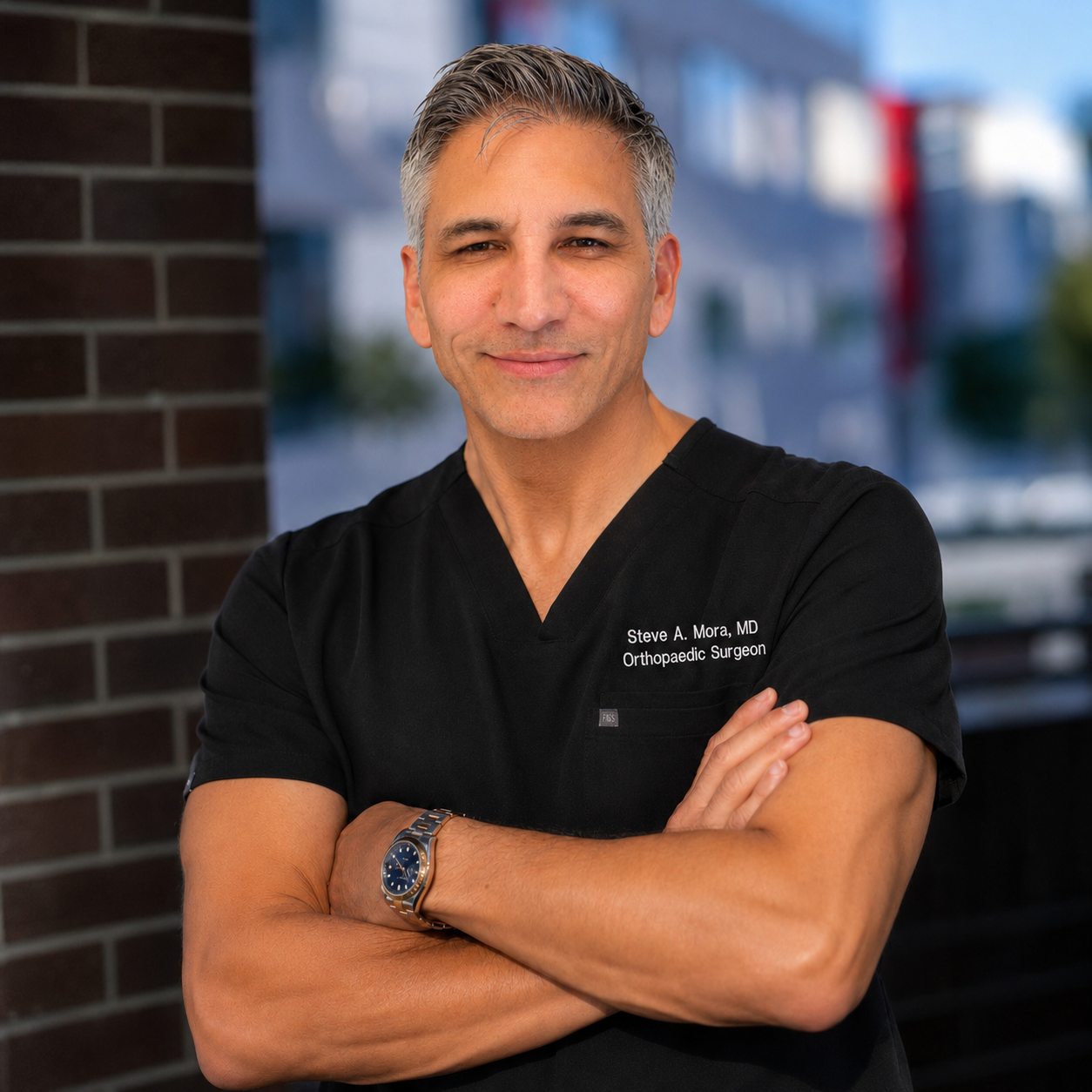
Deep compassion born of shared trauma.
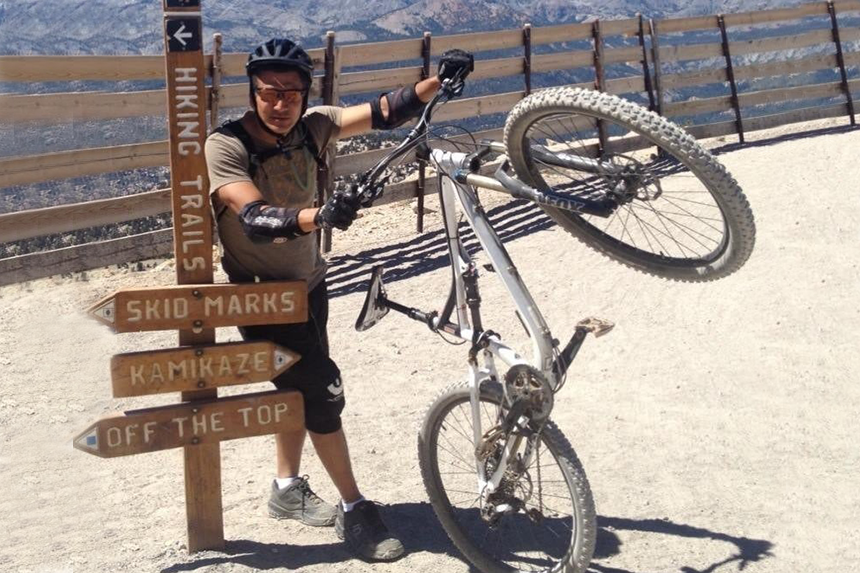
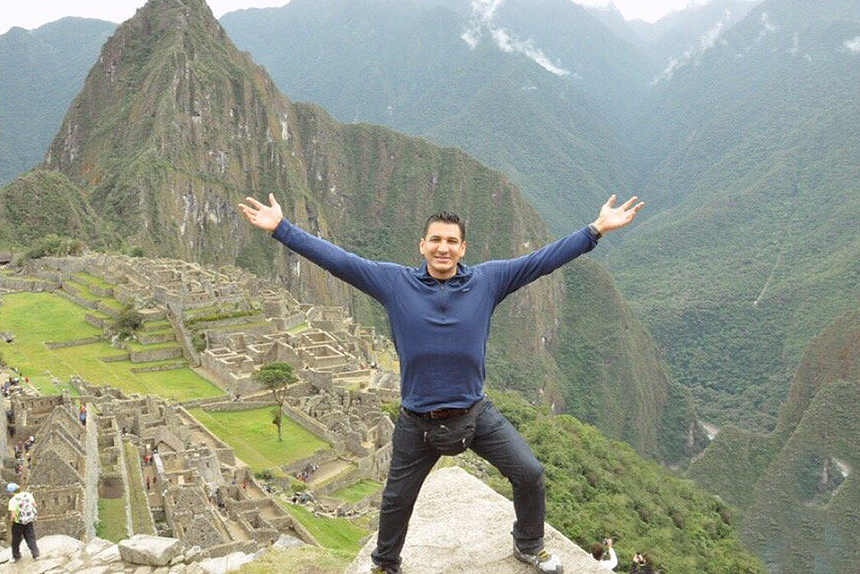
I was run over by a bus at the age of three, leaving me with severe injuries to both legs and a lifetime of orthopedic challenges. I underwent multiple operations, including osteotomies, reconstructions, and leg-lengthening procedures, and later developed significant post-traumatic arthritis and chronic knee pain. Despite my injuries, I was able to maintain a highly active lifestyle.
I don't just see a patient. I recognize myself.
Living through that experience profoundly shaped the physician I became. I understand what it means to hurt, to face uncertainty, and to wonder whether another operation is really the answer. I also learned the value of physical conditioning, joint preservation, injections, and other non-surgical strategies that can help people remain active and delay—or sometimes avoid—major surgery.
My experience as a patient taught me to treat more than an MRI or an X-ray. It taught me to understand the person living with the problem.
"Most of my patients came to me after two or three other surgeons said no. That's usually where the real workup begins."
Dr. Steve Mora
"There's a moment in the recovery room — when a patient sees the result for the first time — they sometimes cry. They're not crying about the surgery. They're crying for what had been taken from them before they got here."
Dr. Steve Mora
"I'm like the Sherlock Holmes of medicine. I really do like to dig in and figure it out."
Dr. Steve Mora
“My practice serves patients from across the United States and internationally. I like to say I’m the surgeon people reach out to when they’ve been told a repair isn’t possible — and the surgeon who proves it usually is.”
My education, training, and expertise.
I trained at LAC+USC Medical Center — one of the highest-volume trauma centers in the country. The surgeons there did not have the luxury of a single-diagnosis mindset. You see everything that comes through a major city’s trauma system, and you learn quickly that what presents first is often not what is actually wrong. Fifteen years after leaving that residency, I still hear those attending surgeons in the operating room. What they taught was not a technique. It was a discipline of looking harder before acting.
From there, sports medicine fellowship. Then more than two decades in private practice in Orange County, California, where the patient population taught me something that no residency could: athletes — whether they compete professionally, recreationally, or in the way they move through their professional and personal lives — do not want to be told what they cannot do. They want a surgeon who takes that seriously enough to look for another answer.
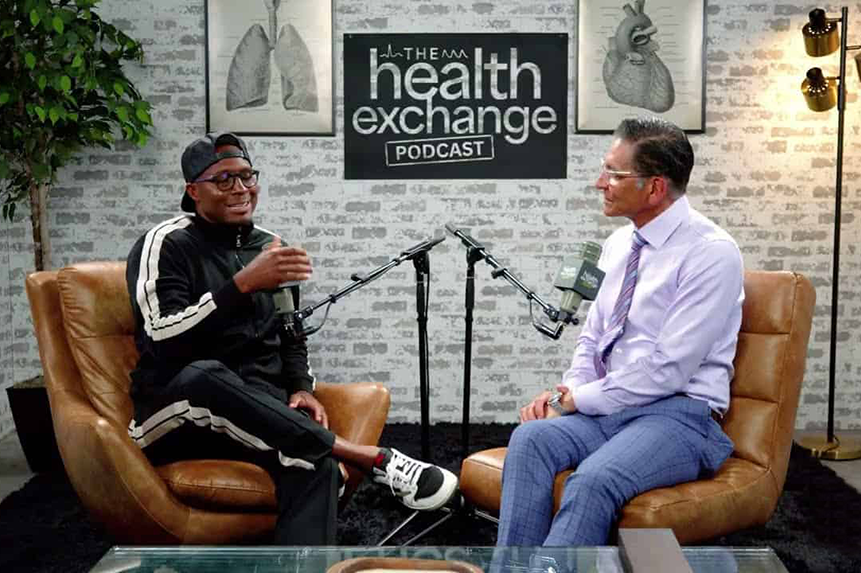
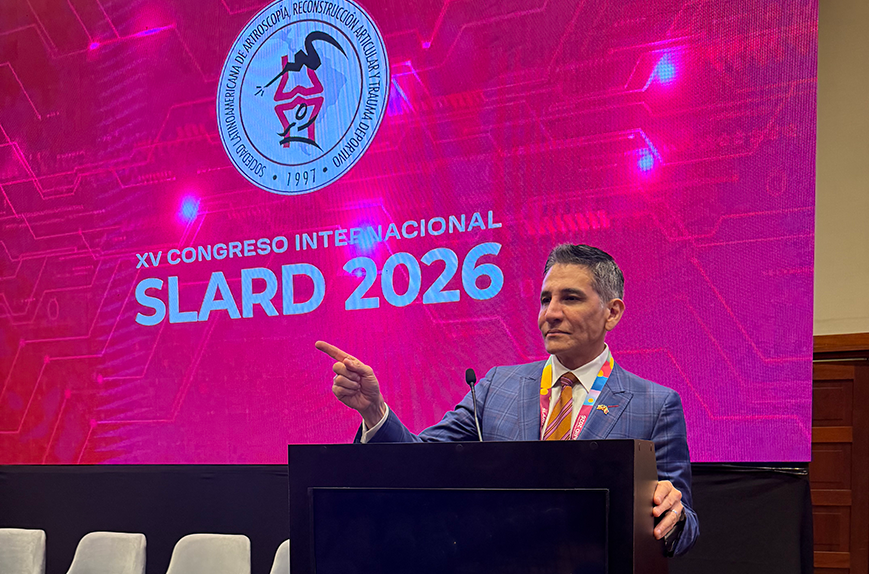
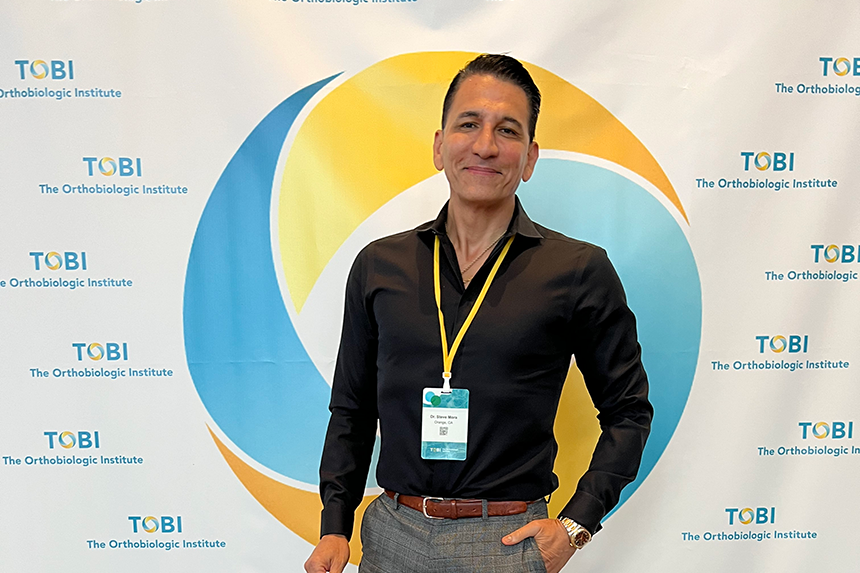
I’m also a frequent lecturer on sports injuries, and have been published extensively on sports-injury-related topics. I am a member of the Arthroscopy Association of North America (AANA) and the American Academy of Orthopaedic Surgeons. I am also the personal physician for professional world champion combat sports athletes and gold medal Olympians.
The PecFlexFix™ is an advanced reconstructive approach I pioneered for the treatment of chronic, severely retracted, and complex pectoralis major tendon tears—injuries that can be particularly challenging to repair using traditional techniques. In September 2026, the technique was published in JBJS Essential Surgical Techniques, with me as the lead author. PecFlexFix™ provides surgeons with a reproducible reconstructive option for restoring the anatomy, length, and function of the pectoralis major in difficult chronic tears, including cases once considered too old or too retracted for conventional repair.
Expertise
Specialties
- Orthopedic Knee and Shoulder Specialist
- Knee, Elbow and Hip Arthroscopy
Subspecialties
- Sports Medicine
- Cartilage Restoration
Special Expertise
- Complex Knee and Shoulder Reconstruction
- Partial Knee Replacement
- Complex Cartilage Injuries of the Knee
- Sports-Related Trauma
- Arthritis
Education & Training
Education
University of California Irvine (UCI) School of Medicine
- Finished top of my class, earning the coveted Alpha Omega Alpha National Medical Honor Society
Residency
University of Southern California (USC/LAC) Medical Center
- Gained extensive experience taking care of high energy trauma and complex fractures
Fellowship
Santa Monica Orthopedic Surgery and Sports Medicine Group
- Sports arthroscopy, shoulder, knee and cartilage
Procedures & Services
Arthroscopic Shoulder Surgery for:
– Rotator Cuff Tendon Tears including revision repair for failed Rotator Cuff Repair
– Rotator Cuff Tendon Impingement and Bursitis
– Rotator Cuff Calcium Deposits aka Calcific Tendinitis
– Shoulder Instability (Dislocations) and Labral Tears
– Shoulder Joint Arthritis and Loose Bodies
– Shoulder Joint Stiffness (Frozen Shoulder/ Adhesive Capsulitis)
– Acromio-Clavicular (AC joint) Arthritis and Pain
– Biceps Tendonitis and Tears
– Complications Resulting from Prior Shoulder Surgery
Open Shoulder Surgery for:
– Total Shoulder Arthroplasty/ Replacement
– Partial Shoulder Replacement/ Hemi-Arthroplasty
– Shoulder Instability with Bone Loss or for failed arthroscopic repair
– Acromio-Clavicular (AC joint) Separation/ Dislocation
– Proximal Humerus Fractures
– Clavicle Fractures
– Pectoralis Major Muscle Rupture
– Acute Proximal Biceps Ruptures
Arthroscopic Knee Surgery for:
– Meniscus Tear Repair or Excision
– Articular Cartilage Damage/ Chondromalacia
– Stiffness/ Catching After Total Knee Arthroplasty
– Patellar Pain
– Loose Bodies
— Synovitis
Open Knee Surgery for:
– Patellar Dislocation/ Subluxation (MPFL Reconstruction)
– Torn Patellar & Quadriceps Tendons
– Reconstruction of Collateral Ligament Instability
– Persistent Bursitis
– Cartilage Resurfacing including Genzyme, OATS, Fresh Allograft, Meniscus – Transplantation
Elbow Arthroscopic and Open Procedures:
– Fractures including olecranon, radial head and coronoid fractures
– Elbow Stiffness due to arthritis and trauma
– Lateral Epicondylitis
– Persistent Bursitis
Hip Arthroscopy
– For the treatment of labral tears, impingement and loose bodies
- Treatment of most fractures including ankle, forearm, tibia and wrist
Non-Operative Orthopedic Procedures
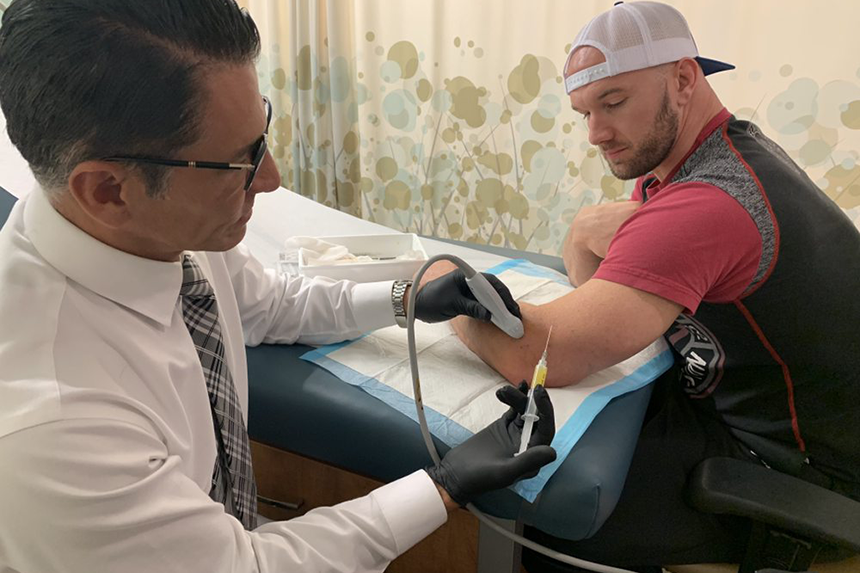
- Including Platelet Rich Plasma (PRP) and Bone Marrow Derived Adult Mesenchymal Stem Cell injections, and Hyaluronic Acid Injections for the treatment of sports injuries and arthritis
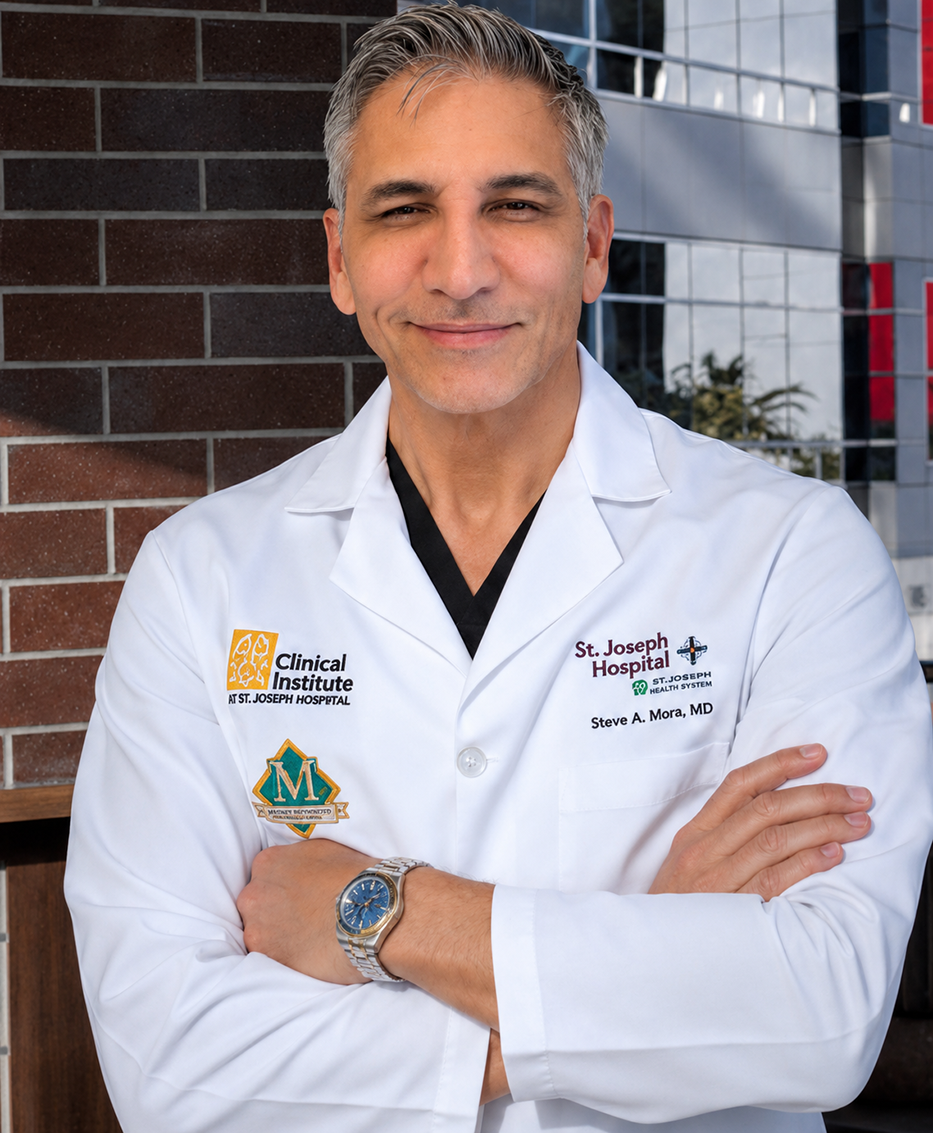
The Four Pillars of Dr. Mora’s Practice.
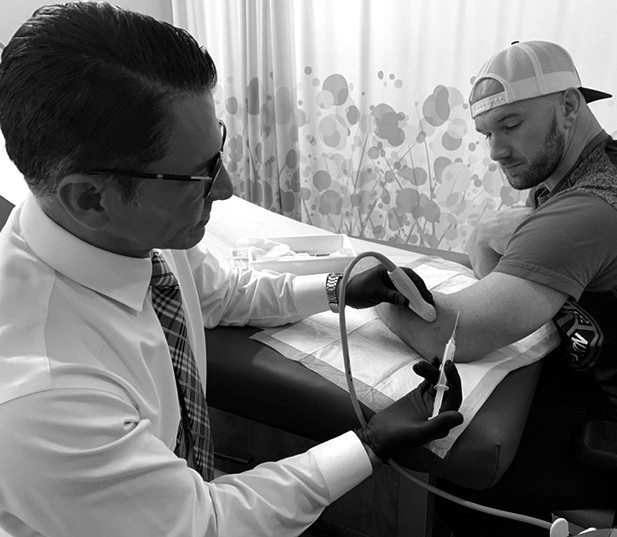
Pillar 1 - Diagnosis
Find the root cause.
Treatment begins with understanding why a patient is hurting, not simply identifying a tear or an abnormal MRI. This means looking at the entire patient and considering structural, inflammatory, metabolic, medical, and lifestyle factors before recommending treatment.
“Every doctor I went to brushed me off and told me it was tendinitis. I had three MRIs that only showed swelling. Dr. Mora listened to me and promised he wouldn’t brush me aside. He did an arthroscopic surgery and found a cartilage injury (not tendinitis!).”
— Brigit L. (Yelp review)
“I went nearly four years with an untreated broken patella and torn MPFL because not a single medical professional believed I was in enough pain for it to be something serious… Dr. Mora understood my pain was real, examined the MRI and noticed the problem in a matter of seconds.”
— Noemi U. (Yelp review)
“About five years ago, after going to eight other docs to try and find out why I was off balance, general discomfort for the previous 30 years, losing feeling in my feet, and so many doctors saying nothing wrong, maybe in my head!!! Didn’t know what to do so went back to Dr. Mora. He knew what was wrong, and immediately sent me to a neurologist. I was diagnosed with two TIA’s (strokes) and Multiple Sclerosis. I was eventually put on correct meds and after seven weeks regained feeling in my feet and my pain level decreased significantly.”
— Florence E., Oceanside, CA (Travels 70+ miles to remain a patient)
“I saw a previous Orthopedic doctor who refused to do surgery on my knee because of previous blood clots. Dr. Mora took the time to explain the process and had me see a Hematologist, who cleared me for the surgery. He listened to my needs and I believe truly cares about my recovery.”
— Roxanne C., Google review
“Was the only surgeon willing to do an MRI to find the root cause of my pain and coming up with an approach to dealing with it. I have been to three other doctors on this issue.”
— Douglas M. (Yelp review)
“Lord knows, if the diagnosis is wrong, the prescribed next steps (or lack thereof) will also be wrong… He got excellent imaging — MRI and x-ray — in his office on the same day as the consult, received the reports, and then reviewed these in detail (both image types, side by side, and magnified down to the most minute level) with me. He really took the time.”
— Sean B. (Yelp Elite review)
“Went to a lot of doctors trying to force a PRP shot on my hand. Then I went with Dr. Mora for his opinion and he was straight up and honest.”
— Fernie G. (Yelp review)
“Mora read the MRI report and didn’t agree with what the doctor had diagnosed… Dr. Mora called the Dr. and the two conversed for some time. Mora ordered a second MRI and Mora’s diagnosis was correct.”
—Mark W. (Yelp review)
“Dr. Mora took a quick look at my MRI and X-rays and said one of your anchors has worked its way to the surface of your joint and is creating some major damage… the other doctors had me rehabbing on this which led to more damage.”
—Evan B. (Yelp review)
“If you’re looking for a conventional doctor, then Dr. Mora is not for you. But if you’re looking for a medical professional who genuinely cares about your well-being, has the knowledge and experience to accurately analyze, diagnose, and treat your injury, and refuses to stop until every option has been exhausted, then you’re in the right place.”
— Miriam M. (Google review)
“Dr. Mora was very thorough, paid attention to detail and even contacted the radiologist who did my MRI because he didn’t feel that it was a good image.”
—Eric N (Yelp review)
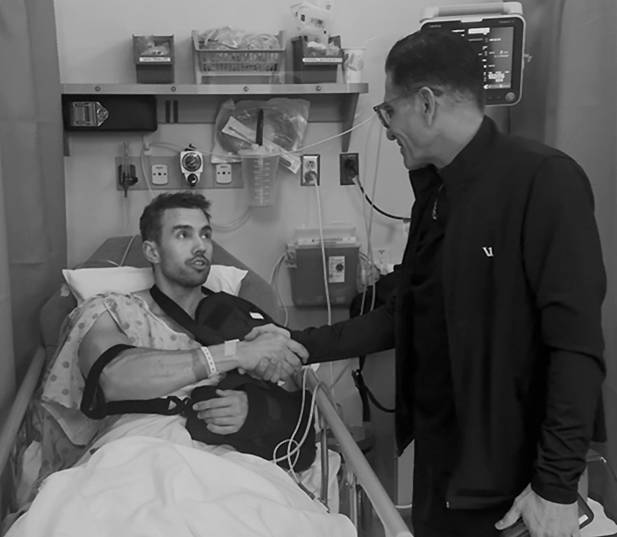
Pillar 2 - Compassion
Treat the person, not just the injury.
My greatest lesson in compassion didn’t come from medical school. It came from being a trauma patient. At the age of five, I was struck by a bus, suffering devastating injuries to both legs. What followed were years of surgeries, rehabilitation, pain, and uncertainty. These experiences shaped not only my decision to become an orthopedic surgeon, but also the physician I am today. I understand firsthand how pain can affect every aspect of a person’s life, both physically and emotionally. Having been on both sides of the operating table, I know how important it is for patients to feel heard, understood, and supported. Above all, I believe that one of the most important things a physician can offer a patient is hope.
“He has addressed questions and looked for solutions utilizing our restrictive insurance. His office has worked with the insurance to get referrals approved in an urgent manner. Even during his busiest days, he takes time to answer and address questions and concerns.”
— El Rah (Google review)
“I truly believe through his skills, experience in and out of the operating room he really understands a patient’s fears and issues.”
—Lupe B. (Yelp review)
“Not knowing what to expect from an injury such as this left me feeling worried, especially since I am a professional firefighter as well as being highly active in jiu jitsu and mountain biking. Everything I know and do were on the verge of being whisked away. Enter Dr. Mora. After only our first appointment I left full of hope.”
—Jason L. (Yelp review)
“As a patient that is facing accessibility and mobility issues, I found Dr. Steve Mora and the staff at Restore Orthopedics to be kind, patient, helpful, and highly professional. Dr. Mora is a considerate and compassionate doctor who treats patients without any judgments.”
— Daryn H. (Yelp review)
“I went to Dr. Mora today for knee problems and I have to say he is the only orthopedic doctor who has actually taken the time to hear me out and make me feel like he cares about my health. Other doctors only talk to me for just 10 minutes and prescribe me medicine that I’m allergic to and don’t take the time to diagnose me right. I highly recommend this doctor to others who are wanting to be treated like a human being and not just another patient!”
— Beth H. (Yelp review)
“You can tell Dr. Mora’s background and life experiences have truly inspired him to be in this field.”
— Renee C. (Yelp review)
“He himself suffered an injury which required surgery and therapy so he knows first hand how it feels to be in those situations.”
—George G. (Yelp review)
“After two years of recurring knee pain/meniscus tear and doctors who made me uncomfortable, I found Dr. Mora! When I let him know I was most comfortable being awake for the surgery under local anesthesia versus general, he was happy to do so! I watched the whole surgery happen on a monitor in real time.”
—Tatyana P. (Yelp review)
“Dr. Mora took a quick look at my MRI and X-rays and said one of your anchors has worked its way to the surface of your joint and is creating some major damage… the other doctors had me rehabbing on this which led to more damage.”
—Bryan L. (Yelp review)
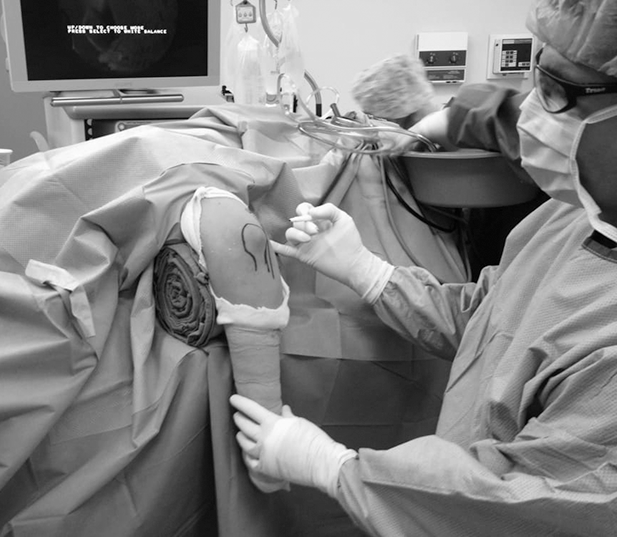
Pillar 3 - Joint Preservation
Preserve before you replace.
Whenever appropriate, the goal is to protect and preserve the patient’s natural joint. This includes exercise, rehabilitation, regenerative treatments, biologic therapies, minimally invasive procedures, and other strategies that may delay or avoid joint replacement.
“Dr. Mora is the best, been helping me keep my old knees through Stem Cell and PRP injections… I had been told there was nothing to do except a replacement.”
—Steve M. (Yelp review)
“Dr. Mora did my left knee root repair of the meniscus. Sometimes people believe it’s not repairable. However, Dr. Mora’s attention to detail, excellent follow through, great staff and physical therapy — mine is repaired and strong.”
—Sheryl E. (Yelp review)
“The six basic stretches recommended by Dr. Mora on YouTube are incredible. They absolutely work! Now every time I feel tightness or any kind of pain, I stop and do three of the stretches or all of the stretches and it goes away.”
—Fei L.H. (Google review)
“As an athlete, I have suffered multiple knee injuries, which required surgery. Dr. Mora’s approach is minimally invasive but extremely effective. His care towards patient wellness and longevity truly make him stand out.”
—Nicolas LJ. (Google review)
“He is conservative in his approach, not jumping to surgery as the first choice, and gives you choices on how to proceed, but recommending the least invasive methods first.”
—Randy M. (Yelp review)
“I went to see Dr. Mora after 2 surgeons told me I had no choice but to do a knee replacement for my pain. After examining me Dr. Mora felt I had other options to try if I was willing… It has worked so well that I am now 95% pain free.”
—Pat E. (Yelp review)
“Unlike most doctors who usually suggest surgery right off the bat (because it means $$$$$), Dr. Mora was willing to ‘wait and see’ if the injury would heal without surgery… I train and fight in Muay Thai Kickboxing… After an 8 week fight camp, I had my comeback fight where I won via unanimous decision. I had no issues with my foot.”
—Marie AK C. (Yelp review)
“Based on the interview and X-ray, Dr. Mora explained and presented the facts to me and my husband, then he clearly stated medical input that the best option for me is ‘No surgery needed, give the body time approximately 3 months to heal on itself.’ Afterwards, he personally used ACE elastic Bandage wrapping horizontally around my chest and arm to provide extra support… I truly appreciate Dr. Mora who is honest and genuinely looking out the best interest of his patients — a breath of fresh air in today’s healthcare environment.”
—Tsui W. (Yelp review)
“I broke my ankle 6.5 years ago on Mt. San Jacinto; I thought it was not broken and limped for 1.5 years. Finally, I went to see three other doctors… The other doctors were ready, willing, and quite keen to put a bolt in it, fusing my ankle. I would have been unable to squat or run. I was devastated. I went to see Dr. Mora, who said with PT, I ‘might get 85%’ back. I liked the odds, and I followed his advice. 3.5 years later, I am happy to report that while I am not 100%, I have made some marathon-like treks in China, Malaysia, Prague, Vienna, and in the last two weeks — Oz and NZ.”
— Kenneth M. (Yelp review)
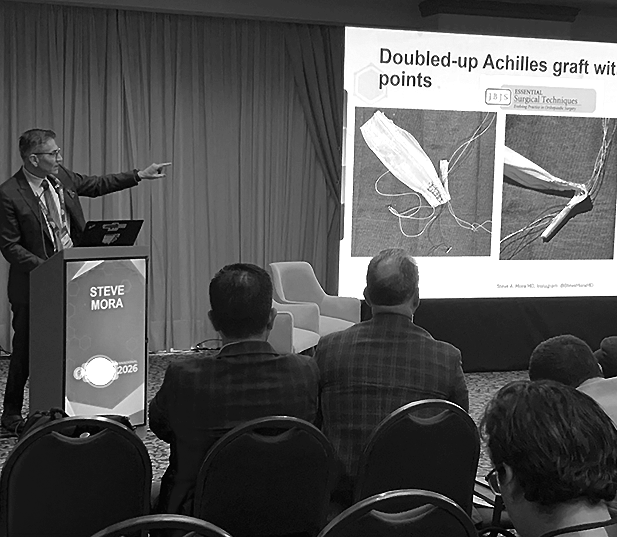
Pillar 4 - Expertise
Over 20 Years of Experience. Advancing What's Possible.
With over 20 years of experience as an orthopedic surgeon, I specialize in complex tendon injuries, particularly chronic pectoralis major and biceps tendon tears. I am sought after by professional athletes and active individuals worldwide, many of whom have been told their injuries are too old to repair. My innovative technique for chronic pectoralis major reconstruction has been published in JBJS Essential Surgical Techniques, part of the prestigious Journal of Bone and Joint Surgery family. Through surgical innovation and experience, I strive to restore function and offer hope where others have found few options.
“I had a complete dislocation of my shoulder at work with the associated labrum tears and also broke the bone. Dr. Mora assured me he absolutely could repair everything and did just that. I’m now a year post op and back to doing everything I used to do prior to the injury.”
—Matthew R. (Yelp review)
“I saw Dr. Mora for a pec major repair and couldn’t be happier… I am 6 months post surgery and very pleased with the whole process… Best of all I have a hidden scar and a symmetrical chest wall again.”
—Adam L. (Yelp review)
“I tore my pec doing Jiu-jitsu at age 51 and Dr. Mora fixed me up as good as new. Quick recovery with almost no scarring. I drove from Torrance out to Orange because a co-worker had the exact same injury, doing the exact same activity, and he highly recommended Dr. Mora’s office.”
—Aaron C. (Yelp review)
“I had three unsuccessful arthroscopic meniscus surgeries with two other doctors and, unfortunately, I was ‘bone on bone.’ He took the time to tell me my options and what kind of outcome I could expect. He was to the point and I found that refreshing… I never expected to be this athletic again.”
—Glenn C. (Yelp review)
“You gave me hope and proved the others wrong… Anyone battling knee issues, give SAM a try. Where others fail he’ll find the avenues to keep you healthy.”
—William P. (Yelp review)
“Dr. Mora saved my career. I was going to my original doctor, who said there was nothing I could do and he sent me to a pain specialist with a message get ready for a shoulder replacement in the coming years. I couldn’t accept their diagnosis… After the surgery I had immediate relief. He followed up with three PRP injections to the shoulder joint and I can say I am feeling great one year later. I am back to full strength, I can box, lift weights and most importantly I can work.”
—Evan B. (Yelp review)
“I had a chronic pectoralis major tear that I thought was never going to be fixed. The amount of time allotted post injury made this a very unique fix that most doctors turned me away for. Not Dr. Mora. He successfully repaired my tendon with an allograft and I am on the way to regaining strength back in my pec.”
—Mac G. (Yelp review)
“I had a very old pectoralis major tear on my right side. I was told this could not be fixed by several other doctors. I found Dr. Mora on the Internet… The surgery was flawless. I feel great… I happily paid out of pocket and would do it again without hesitation. If you’re considering getting your old pec tear fixed, do it. Mora is a master.”
—Randy M. (Yelp review)
“I’ve seen dozens of orthopedic surgeons over the years and was constantly told I was not a candidate for surgery. My life was falling apart waiting for it to be repaired and luckily Dr. Mora was there to take my call… The tear was over 12 years old when initially repaired, and 14 years old (and completely torn again) by the time I saw Doctor Mora… I’m about 11 months out from surgery and have gained a tremendous amount of function that I honestly did not think was possible to get back.”
—Matthew S. (Yelp review)
My approach to orthopedic care begins with a simple question: Can we preserve or repair what nature gave us rather than replace it?
Every treatment begins with an accurate diagnosis and a thorough understanding of the patient’s condition and goals. Whenever possible, I favor nonsurgical treatments that can relieve pain, restore function, and help patients return to the activities they love.
When conservative treatment is unsuccessful and surgery offers a high likelihood of meaningful improvement, my priority is joint preservation. This may include repairing a torn meniscus rather than removing it, repairing a rotator cuff with biologic augmentation when appropriate, or using regenerative therapies to support healing and recovery.
Joint replacement has an important role when preservation is no longer a reasonable option. But my philosophy remains the same: Treat conservatively when possible, preserve and repair when appropriate, and operate when the expected benefits justify the risks.
My goal is not simply to perform surgery. It is to help each patient achieve the best possible long-term outcome while preserving as much of their natural anatomy and function as possible.